
For: Dentists, DAs, and OHTs · Read time: ⏱️ 2 min
When you'd use this
- Mid-consult second opinion
- Drafting referral letters
- Explaining findings to patients
- Reception handling post-appointment calls
💡 A quick note
Chairside can help surface information, generate drafts, and explain concepts, supporting clinicians in making informed decisions while keeping them in control of patient care.
Its responses are designed to be helpful and evidence-informed, but they should be considered alongside current guidelines, professional standards, and your own clinical judgement, particularly in rapidly evolving areas of practice.
Before you start
Open a consultation and use the Ask CoTreat anything bar at the bottom of the screen.
The more context available in the consultation, the more tailored the response will be.
-gif.gif?width=670&height=369&name=gif_Chairsideprompts%20(2)-gif.gif)
Find the situation below, copy the prompt, and adapt as needed.
1. When you're considering treatment options
Sometimes a presentation isn't straightforward, and you'd like another perspective before deciding on a plan.
Try asking:
- What differential diagnoses should I consider for this presentation?
- Based on the findings discussed in this consultation, what would you prioritize in the treatment plan and why?
- Summarize current evidence for managing cracked tooth syndrome.
- What does the literature say about treatment options for a partially impacted lower third molar in a 32-year-old?
- Summarize current guidelines on CPAP versus mandibular advancement devices for sleep apnoea.
2. When something doesn't quite fit
If you've identified a lesion, unusual finding, or possible red flag, Chairside can help you organize your thinking before referral.
Try asking:
- What are common differential diagnoses for this lesion?
- Summarize oral lichen planus and current management considerations.
- What red flags in this presentation would warrant specialist referral?
3. Referral Letters and Documentation
The consult is done, now you need the paperwork without spending 10 minutes writing it.
- Draft a short referral letter for impacted wisdom teeth including symptoms, examination findings and radiographic observations.
- Create an orthodontic referral outlining crowding, bite relationship and patient concerns.
- Generate an endodontic referral summarizing pain history and clinical findings.
4. When patients need a simpler explanation
Clinical language doesn't always translate well to patients.
Try asking:
- Explain periodontal disease in simple patient-friendly language.
- Explain why this cracked tooth may eventually split.
- Rewrite today's treatment discussion in plain English.
- Summarize the treatment plan into three clear next steps.
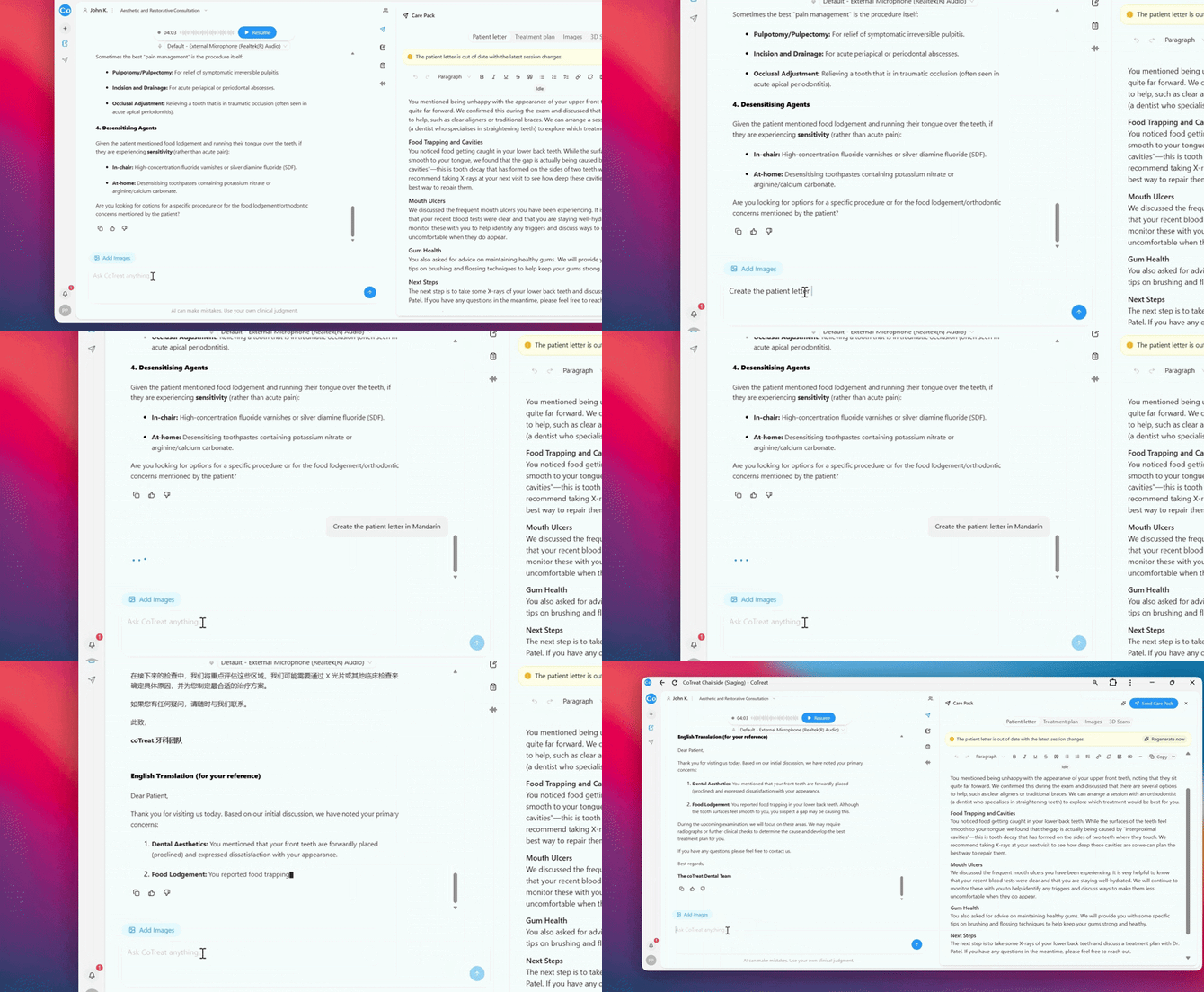
5. Translating Care Advice
Your patient is more comfortable in another language, send them home with instructions they'll actually read.
- Translate extraction aftercare instructions into Mandarin.
- Rewrite this care advice using shorter, simpler sentences.
6. When reception needs support
Chairside can help your front desk provide consistent information to patients.
Try asking:
- A patient had a filling today and is still numb. Is this normal?
- A patient had an extraction and is still bleeding after 3 hours. What should reception advise?
- Summarize today's treatment plan so reception can explain it to the patient.